As things are now changing and from tomorrow we are allowed to exercise multiple times a day and drive to a destination I think it's a good time to finish the lockdown series. As I look back on events that unfolded I will always remember these last few weeks and the benefits wildlife gave me whilst feeling low and isolated it has always given me a lift! I hope you enjoyed the posts and we will be blogging as usual throughout the year about our birding and (hopefully) ringing experiences...
Seeing the first Swift of spring is always a magic moment! They are the true acrobats of the sky and an amazing long distance migrant that may not land for over 2 years!
The last week or so has been action packed for birds and birding with settled weather and favourable winds yielding plenty of surprises even for landlocked birders such as myself at the moment. A walk up to our favourite fields above the house presented me with the find of the Spring for me personally! A Blue-headed Wagtail which was sadly all too brief for a photograph as it came out of the same field that I found a Lapland Bunting on January 1st! The habitat in this one particular field is so unspoilt with rare wild flowers and grasses and a healthy population of Skylark and Yellowhammer it is an oasis for birds and a time warp to how things would've looked in the entire area 50 years ago (before intensive farming and early silage cutting).
More Common Whitethroat have arrived in my local area this year having successfully completed their migration in the fine and settled weather, This showy male wasn't best pleased with our presence on his patch!
The high ground above my house is an important area for Skylark which breed in a large uncultivated field, sadly such habitat is very rare to find these days which is a major factor in their alarming decline (over 75% since 1970's)
As we were sat having dinner in the garden on Friday evening I happened to look up in the sky and noticed a group of Red Kite's soaring overhead! This was surely the start of the annual Red Kite influx to Cornwall and the next day huge numbers poured through the county with a record count of over 300 birds recorded from a garden in Marazion! I'm sure many of you reading this may have seen some of these graceful and eye-catching raptors from your own garden or on your local walk and if you haven't yet seen one do keep looking as they are still being reported throughout Cornwall (for a write up on the Red Kite influx it's worth reading this article by CBWPS: https://www.cbwps.org.uk/cbwpsword/sightings/)
Cornwall enjoyed a spectacular arrival of Red Kite with several hundred birds logged across the county! Note the primary moult in this bird ageing it as a 2nd calendar year. All birds I scrutinized were the same age and indicate that as usual they are probably all non breeding birds originating from the successful reintroduced population around the UK.
In a bright sky against the sun or high up in dull light Red Kite can look very dark meaning potential confusion with the much rarer Black Kite. Shape & structure are the best clues to it's identity with Red Kite showing a longer tail with a noticeably deeper notched fork. They have longer/thinner wings and the overall shape is less stocky than a Black Kite.
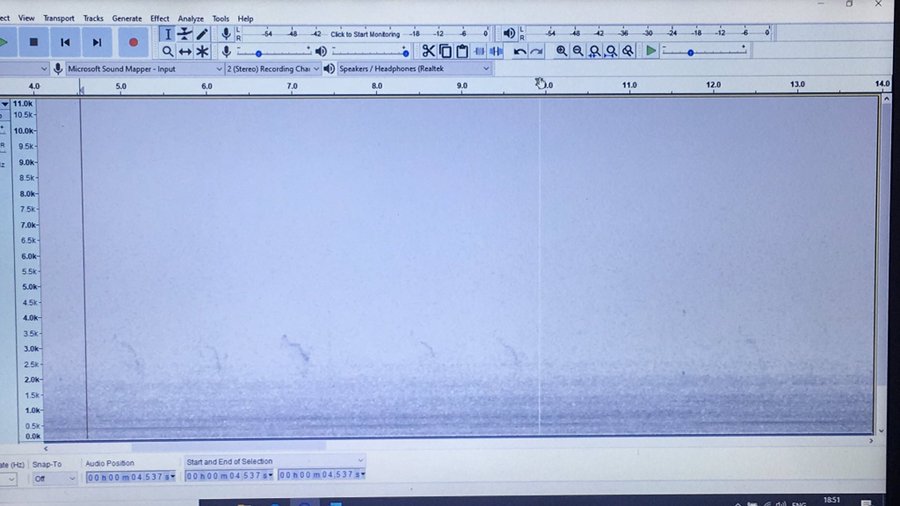
Even the Noc Mig recording was superb this week with several big groups of Whimbrel over the house plus some Dunlin and most bizarre and amazing of all a substantial flock of Common Tern recorded migrating over the house in the early hours! Noc Mig is changing my understanding of migration and I would never have guessed that Common Tern would migrate well inland through Cornwall at night!
Our resident birds seem to be having a successful breeding season so far thanks to the settled weather I suspect. We have been delighted to see fledged Song Thrush, Blackbird & Mistle Thrush in the garden and we have also glimpsed the odd juvenile Robin. The delightful Dippers which grace the river below our house have also raised their young and we were lucky enough to see two juveniles on VE day busily chasing their parents for food along the riverbank. After a while they began to search for their own food and were already pretty adept at catching prey underwater which is amazing considering they were so young out of the nest. It's worth searching for Dippers and watching their antics as they bob up and down the river. They are the only passerine that has adapted to feed underwater and they achieve this by having specially adapted eye lids which have evolved into a pair of water tight bird goggles!
Adult Dipper
Juvenile Dipper
In the future I have learnt to enjoy the nature that is around me and I will be continuing my photography and walking from home even after lockdown as I feel more familiar with where I live than ever before. I'll never stop going to the coast though as a birder the coast and migration is unmissable for me...
There are a healthy population of Roe Deer around my house but you need to get up very early to see them
It isn't just birds which have caught our interest over the lockdown and it has been amazing to see the variety of nature that visit our garden and the surrounding farmland around the house.....
Brown Trout rely on camouflage to avoid capture from Heron's and other predators and their cryptic colours and spots certainly help achieve this, can you spot it in the picture?
Earlier on in lockdown I bought a trail camera for only £50 and each night me and Libbie take it turns to place it somewhere around the garden or the farm next door and it's been amazing to record the different animals which pass it at night! Basically the camera works on movement so if anything goes past it's sight it will trigger 20 seconds of video and with the night vision it has it really is amazing value and great fun to look through the next day. Seeing these Roe Deer behaving naturally in the wild and also these two Wood Mice without them being disturbed is really captivating as it offers a glimpse into their lives.
Our 'pet' rabbit (known in the family as Reggie!)
I've also recorded foxes and hedgehog's overnight on my sound recorder and both noctule and pipistrelle bat. Plenty of rabbit's have also found the garden to their liking and have so far managed to avoid the dog!
Common Toad is best looked for at night as they roam about searching for insects
Our garden pond at night is full of Newts, Frogs and Toads and we've even seen a Grass Snake briefly sunbathing but sadly no photo!
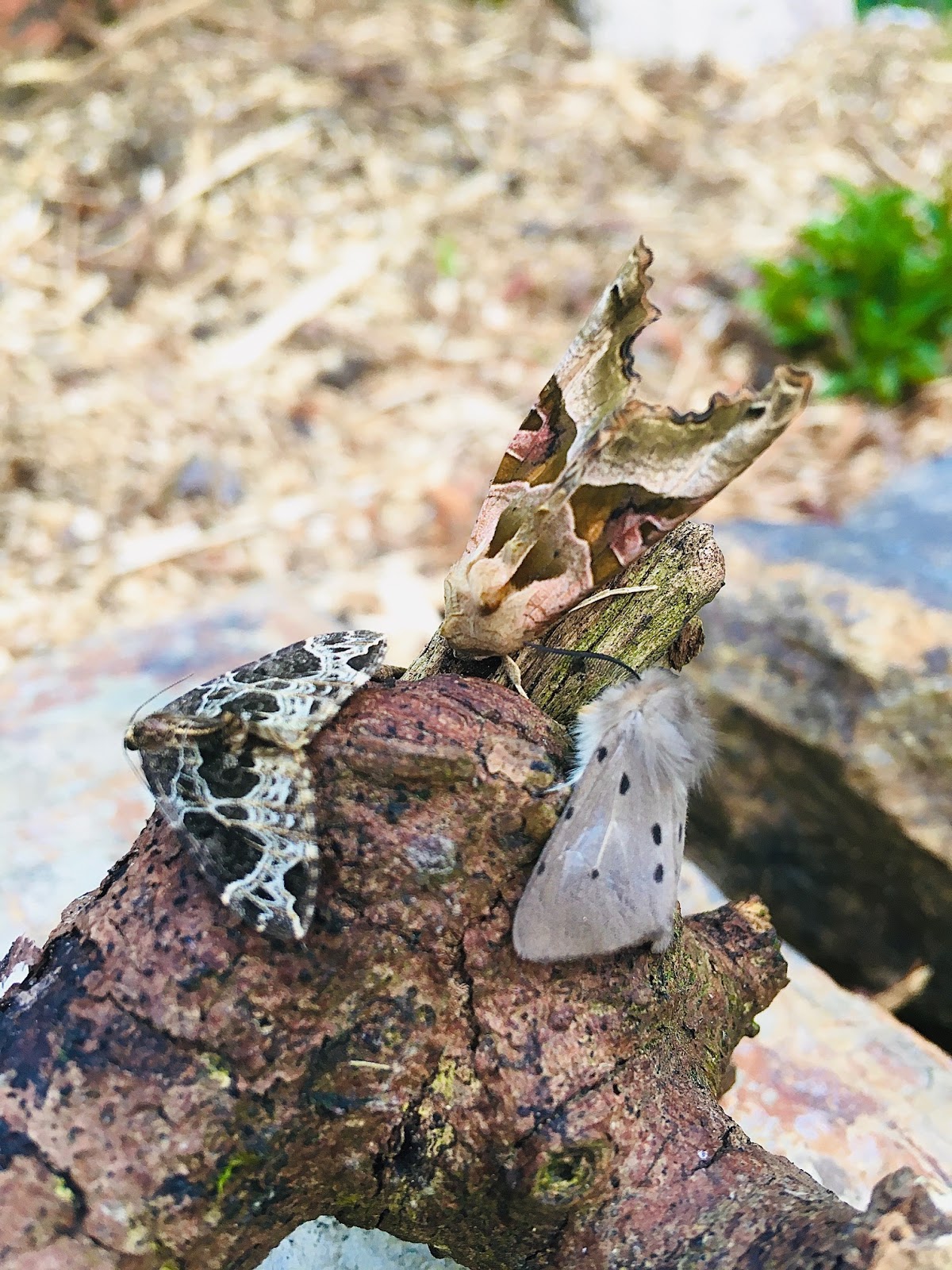
I've never seen the point in mothing before now but I've been ignorant to these fascinating creatures. (Species photographed are: top Angle Shades, left Small Phoenix and right Muslin Moth)
We have also taken an interest in Moth's and set the trap each night and wait in anticipation to see what gets attracted to the light. The only thing is that our trap consists of an outdoor porch light and a fishing net! But it works well enough for us to learn them slowly and we have so far seen seventeen species including Fox Glove Pug, Least Black Arches and Ruddy Streak. All of the moths have really intricate and often stunning patterns and some of them have fascinating origins such as the Ruddy Streak which is an escapee originally from Australia!
Never an easy Butterfly to photograph, it has been a very good spring for Holly Blue with numerous sightings
Butterflies have been out in force especially over the weekend and we spotted the first Wall Brown of the year taking the overall tally to … species since lockdown. Sunday's warm weather also brought out the first Dragonfly of the year with this stunning Beautiful Demoiselle.
Beautiful Demoiselle
This was supposed to be a blog post without birds but I can't help it they will always be top of the tree for me and they have been the highlight of the week for me as usual! An early morning walk brought me the gift of a singing Cuckoo ,the first one I've heard near to home for many years! Swallow's, House Martins and even a Sand Martin have flown through the garden during the day whilst at night I recorded an Oystercatcher (first for the garden!) and more groups of Whimbrel, Little Grebe, Coot and Moorhen. Probably the most unexpected bird though was a Woodcock that flew over on 28th April calling as the sun set. Probably just a late migrant as I don't think they breed in Cornwall I only recognised the call after hearing them frequently in Lithuania last Spring. So the surprises that nature can give are still just on the doorstep and learning about the Mammals, Moths , Reptiles and Amphibians has been a great distraction and certainly something that wouldn't happen in normal life and yet I'm glad that it has.
It is nearly May and I am sure with some certainty that if I wasn’t confined to my property and local daily exercise schedule that something rare somewhere in the southern half of Britain would be luring me in its general direction and the “Twitch” would be on.
In my early days as a birder it was impressed on me that twitching a rarity should be shunned and there was no fun in it apart from the growth of a pointless list! Sadly, I lived that life for more years than I should have, and the consequence has been that I have missed some truly great birds due to stubbornness! Thankfully now I am not so easily led, or pig headed and in recent years I have travelled about to see some of the natural worlds most elegant and beautiful avian wonders. But what is the point in twitching? Is my sole purpose to build an endless list in the vain hope that one day I can use it as some metaphorical truncheon to beat any young up and coming bird nerd into submission? Or is there deeper value and meaning to seeing a new and rare bird? Well I think so! As somebody who is reasonably proficient at general birding, I tend to do OK for odd and rare records each year helped by the fact that I live in the surprisingly under watched Cornwall. So why leave the picturesque oasis of home to see birds when the chances are you will find something half decent nearby? Well, simply put for the novelty and learning opportunities.
Let’s face it there are not many people who don’t like seeing and experiencing something new! I find twitching can bring out a huge range of emotions reminiscent of a Christmas or Birthday morning! Anticipation, trepidation, jubilation and defeat are all regular feelings when heading for or departing a twitch. How many legal or safe alternatives are out there that allow for such a range of feelings? But perhaps more importantly the learning value and opportunity of seeing something in the field offers so much more than reading about a species and viewing pictures. We have all heard the term “jizz” and the fact that sometimes you just know you have stumbled across something with "Wow" factor before evaluating the finer details of the bird. This gut reaction does not come from knowing everything about possible rarities that could turn up on your patch but from a more extensive experience of the local birds that inhabit an area and just knowing it was unlikely to be one of them. So, seeing a rare bird and having the opportunity to familiarise yourself with its general traits and appearance will only add to this bank of subconscious information in my opinion!
Looking back over the last six months I have had some real twitching luck and the lock down period has given me the opportunity to revisit some of these jubilant experiences. So, without further ado here are some of the recent highlights.
Black-throated Thrush – Whipsnade Zoo – 22nd of December 2019.
I am sure that for the die-hard rare bird enthusiast out there this bird may be best left in the archives due to its immense popularity at the time and the number of pictures that did the rounds. No doubt some people got sick of seeing it! However, I can’t help myself. It was a long drive to Whipsnade Zoo and back home in the same day in fact 540 miles. So, a little more appreciation and admiration for this show stopping stunner is warrant and just I think.
There were a couple of reasons to make such a long drive for
one bird, which is not normally mine and Bob’s style. We tend to wait for two
or three targets in order to justify the expense and effort. Firstly, the
Thrush was an unmistakable male with a grey back, white belly, and a
pitch-black throat and chest, exactly how we wanted to see the species. Secondly, it had
been around awhile and seemed settled so the risk of it departing was perhaps
better than normal odds? Long story short we were one of the first cars on site that morning and waited patiently in the entrance cue for around 30 minutes. Thankfully, once inside the zoo we didn't have to wait quite as long for fantastic views of this handsome bird! Well worth the effort and trip.
The following day I did some reading and found out that in the past 120 years only
around 90 individuals had been seen in the UK and few of them had offered such
great views and the cooperation that this individual had presented us! To put
it into perspective of how far off course this bird was, it is normally found breeding
from the extreme east of Europe to Western Siberia and north-west Mongolia. Add
to that the wintering range extends from the Middle East to eastern Burma. So,
at the end of December it was around 5000 miles north-west of where it should
be! Now surely that deserves some sort of accolade?
Ross’s Gull – Plymouth – 14th of March 2020
Now I must confess I first went up to Plymouth after work on
the 13th of March and did briefly see it for all of 5 seconds before
it sailed off upriver and was sadly not relocated again that evening. The view was almost
to poor to count it and I left a little narked and frustrated! The hour drive
home gave me plenty of time to mull it over and concoct a plan for the
following morning.
Shortly after dawn at around 8 am I was stood in the same
spot hoping and praying the little beauty hadn’t departed over night and that I
was going to get a better view of it that morning. I waited patiently with no
sign but was happy admiring the local Great Northern Divers and Red-breasted
Mergansers from my vantage point. After an hour I was starting to get that
sinking feeling in my stomach that I wasn’t in luck. I thought it best to check the internet
and see if any local news had come out. Sure enough about 15 minutes earlier a
tweet had gone out and it was showing well about 1.5 miles further up river!
Now Plymouth is just like any other city between 8 and 9 am and there was
traffic everywhere. It took me the best part of 20 minutes to navigate and
battle through the local bustle. I am thankful though that it waited for me and
on arrival to the recommended car park I could see it from the far river bank through
the scope. What a relief!
As luck would have it local birding stalwart Darrell Clegg
arrived on site and talked me through some of the mouth-watering avian history
of the site and more importantly showed me how to get a bit closer to the bird
in question so that I could try and get some sort of record shot or video. So
what did I learn from it? Well just as my field guides suggested it was similar
in size and plumage characteristics to that of a Little Gull albeit had a
delightful “dove” shaped and rather large head. It was also slightly larger,
which was quite notable when comparing it to the nearby Black-headed Gulls. It
certainly didn’t appear so diminutive as I have recalled Little
Gulls in the past. I also noted that it appeared to have an extensive primary
projection and I could also quite easily see the diagnostic wedge or diamond-shaped
tail. This particular bird was an adult and it was starting to show a faint pink
flush to the breast but was lacking the neat black neck ring that it will get a
little closer to the breeding season.
The following day I also did a little research on its normal
distribution to refresh my knowledge on such a wonderful creature. Interestingly Ross's Gull breeds in the high
Arctic of northernmost North America, and northeast Siberia. It has a short autumnal
migration and most of the population are found wintering at the edge of the
pack ice in the northern Bering Sea and in the Sea of Okhotsk. So another
species around 5000 miles away from its normal wintering grounds! With around 104 UK records in the last 120 years this species is another rather rare bird that was a delight to see.
Laughing Gull - Cheddar Reservoir - 14th of March 2020
Feeling incredibly lucky having just had superb views of the Ross's Gull I felt it best to maximise my profitability whilst luck was on my side! So I decided to drive two hours north and head for Cheddar Reservoir and try for the Laughing Gull that had been coming into roost every evening for the past week.
I arrived a number of hours before prime time so made the most of the afternoon by enjoying the picturesque spot and take a look at the local bird life. It was a wonderful place and I can see why it has such a good core of local birders. After an all to brief siesta and as the day started to wane it was time to put my serious cap on and get into place. I was one of the first to the area and in all honesty I wasn't expecting many more twitchers as it had been around awhile, but as the minutes ticked by and the local gull population started flying in so more and more people arrived. Before long over 100 people were in place and scopes to the ready! It was pleasant talking with some others that had travelled to the Reservoir with the same goal in mind as myself and I was chuffed that I picked up on the drake Ring-necked Duck that was also present. A bird that a nearby group had hoped to catch up with all afternoon but alas it had eluded them! It was also pleasing to meet some of the Falmouth Uni students on site and had a good yarn and catch up with Toby Flood, Liam Langley, Matt Doyle and Matthew Broadbent. They are a smashing group of lads and my bet is that they will become prominent figures in the birding and ornithological world in the not to distant future! They were also hoping for a double victory day having been for a nearby Kentish Plover earlier that day.
After some heavy scanning of the gulls that were coming and going eventually several of us noticed a sooty looking gull bobbing in and out of view. That had to be it surely? A moment or two later it slipped out from behind a Common Gull and Liam exclaimed "there it is"! Hooray, now that was well worth the effort and drive.
So what useful observations and subconscious impressions did I take away with me? Well firstly it was very distinctive and much darker than I was expecting it to be! My first thought was that it looked superficially like a long-winged mellanistic Common Gull. However, on closer inspection several key differences could be observed. The general wing plumage appeared uniform and dark chocolate brown in colouration. This contrasted nicely with the head, neck and flanks which were extensively smudged with an ashy grey. The bill was very dark/black and the diagnostic slightly dropping shape could easily been seen even at range. As the bird flew I also noted that the belly appeared pale and clean which contrasted starkly with the flanks and upperparts of the bird. It also had a clean white rump which contrasted with the mostly dark tail shown on a first winter bird.
My research following the twitch councluded that in the past 120 years there have been around 260 records of this gull in the UK. However, this figure is slightly skewed due to Hurricane Wilma which led to a dramatic invasion of Laughing Gulls
in early November 2005, possibly as many as 70
individuals arrived! So, whilst a little more frequent than the previous species I had recently seen, it is still bordering the "mega" end of the rarity scale! I also brushed up on the Laughing Gull's home range and found out that they normally spend their winters from North Carolina and along the west coast of Baja California; along the Pacific Coast from Colima, Mexico, south to northern Peru! Making the Cheddar bird some 3500 miles west of its intended winter haunt.
I do keep lists of bird species I have seen but only two are important to me and they might surprise you! The all important one to me is my Cornish list. I don't think there is is anything quite like seeing a new bird in your home county. Although I know that I am extremely lucky living where I do, as its avian history and rarity potential is some of the most desirable in the UK! I also love my Western Palearctic listing which is in its infancy but Ross's Gull was my 500th species. So I feel it is off to a good start and I have some superb trips planned for the next few years so lets hope it continues to grow. Is there a point to all of this? Well, for me at least I love the novelty value and thrill I get from "going" for new birds. But the learning opportunity and experience I gain is by far the most important aspect for me! Lets hope for some more educational conquests really soon. I hope I get to see and meet some of you there.
The answers for last weeks sound quiz , if you missed the quiz just scroll further down the blog. Also a big thankyou to John Miller, Paul Ash and Gary Thoburn for supplying the stunning photographs.
Sedge Warbler: A very excitable songster that sings erratically with lots of ‘fast mimicry’ – it can impersonate many species but these calls are always delivered quickly and in amongst their usual buzzy repertoire. Easily found in the right habitats in Cornwall; particularly reed beds, lake margins and wet meadows and it can even nest in mature hedgerows. Sedge Warbler is also a regular spring migrant and can be found singing along the coast, especially in sheltered valleys.
Reed Warbler: Delivers a fast-monotonous song that sounds superficially similar to Sedge Warbler but it has more rhythm and tends to repeat notes before moving onto a new noise without a break in the song.Not as widespread in Cornwall as Sedge Warbler owing to the fact it tends to be restricted to Phragmites Reed when breeding. However, if you visit the right habitat anytime from now onwards you will stand a good chance of hearing one singing. As a migrant Reed Warbler will sing from less typical habitat particularly in coastal areas up until early June when the last returning birds arrive.
Blyth’s Reed Warbler: This Acro has an interesting song quite unlike that of Reed Warbler being more similar to Marsh Warbler to my ear. The song is given at a steady pace but it has a ‘stop, start’ feel to It with several notes uttered in succession followed by brief pauses. They can mimic species well and produce a whole variety of rattles and tunes but to my ear at least the song seems to have a rather mournful quality at times with down slurring whistles repeated throughout the song in most instances. Blyth’s Reed Warbler is expanding its range into Western Europe and I expect more singing males to be found in spring across the UK in the next decade. In Cornwall the only records come from the ringing mecca of Nanjizal Valley (where they have been annual during Autumn in the last few years with one late spring record) so I believe they pass through other parts of West Cornwall undetected due to their skulking nature. Birders should be mindful of Blyth’s Reed Warbler in late spring (they are a late migrant which tend to arrive on their breeding grounds from mid to late May onwards) in meadows and coastal valleys with good cover. They are not really a reed bed species and tend to favour lakesides and swampy habitat in which to breed.
Marsh Warbler: Marsh Warbler is of course well known for being an outstanding mimic of other species. In fact I don’t think any other warbler can imitate as many different species. I’ve read many times that ‘if you hear several different birds singing from one bush then it is probably a Marsh Warbler’. I do think that’s a little bit misleading as so many warbler species mimic other species well. But the sheer variety of different calls within the song, as well as the fast pace and ‘squeeky toy’ sounds make it a distinctive song. In the UK Marsh Warbler is a rare breeding bird with a declining population and it is also a very scarce migrant. In Cornwall it is a rare migrant but does turn up in late spring from time to time. A passage bird is just as likely to sing from a mature hedgerow or the edge of a wetland than from a reedbed margin. It’s worth knowing too that Marsh Warbler is a late spring migrant with early June being a particularly productive time for one to occur.
Song Thrush: A trick question! But an important species to learn and be confident with in regards to its song when ruling out other species. A loud singer which pretty much always repeats the same note three or four times, followed by a brief pause (almost as if it’s taking a breath) before singing another three notes. Song Thrush will mimic most species remarkably well as well as mechanical noises which it may have heard in the past. They will occur in most habitats and I have heard them singing from reedbeds and scrubland alongside Acro warblers. They will also sing very early in the morning before sunrise and commonly sing after sunset in spring.
Nightingale: Another trick question! The Nightingale has perhaps the most famous song bird of them all. Its magical song is full of scratches, whistles, trills and mimicry. It could well be found in similar habitat to all of the species in this quiz (although in Cornwall it is a county rarity and far from annual in appearance) and a singing bird on migration could cause confusion. Listen out for it’s typical notes as the male starts the song it builds up in speed and then often finishes with a very fast rich rattle (listen here). Similar in style to a Song Thrush it then often pauses for a split second (which can feel longer) only to begin again. Nightingale can’t really be looked for in Cornwall but it certainly can be hoped for over the years for any diligent patch birder or during spring migration. I have found three singing males and they have always been a complete surprise.
Great Reed Warbler: This species sounds ‘big and clumsy’ a bit like how it looks! The song is rather loud and lower pitched than other Acro’s helping it to stand out in the reed-bed. It starts at a slow pace and often stops again after a couple of seconds; the repertoire of notes never sounds so extensive to my ear with the main phrases sounding rather croaky in tone.A rare vagrant from the Continent however a singing male in Spring is the most likely way of getting this rarity on your self-found list. Best hoped for in reed-bed habitats such as Marazion Marsh perhaps, however they do occur on migration (abroad at least) in very small ditches and scrub patches so perhaps it should be on birders radars elsewhere.
Grasshopper Warbler: This may well be the only Locustella you ever hear singing in Britain as the other two examples in the quiz consist of a rare migrant and a rare vagrant. However, Grasshopper Warbler will often sing from a reed-beds (like Savi’s) and can favour swampy ground similar to the habitat a singing River Warbler could turn up in (if only!) so knowing it intimately is important. The main things I notice is that it is slightly less ‘clear’ sounding compared to Savi’s Warbler and the diagnostic part for me is that the song changes in pitch regularly, Savi’s and River Warbler sound more monotonous from my experience. This species is sadly declining but it can be found in Cornwall on un-spoilt moorland, meadows and crop fields. It sings more frequently early in the morning and again late into the evening.
River Warbler: The song of the River Warbler is typical for a Locustella warbler; a continuous buzzing drone which is shared by all species of this family group. However, its song has a very subtle disyllabic quality (I liken it to a water pump or a cricket) and the tone of the song is constant and never changes its pitch (such as Grasshopper Warbler will.) River Warbler is a rare vagrant to the UK in spring with very few records but it could well turn up in Cornwall. It favours swamp like habitat and acidic bogs in its home range so perhaps one day it’ll be a dream find for somebody in the Lizard area, Goss Moor or Bodmin Moor.
Savi’s Warbler: The whirring song of the Savi’s Warbler has a rather mechanical quality to its song, which is monotonous and ‘dry’ sounding. The pitch doesn’t change throughout and it always sounds rather clear in quality. Savi’s Warbler is a rare spring migrant to the UK with small numbers arriving from April on wards in most years. In Cornwall it is a county rarity and I believe the last record was ten years ago at Marazion Marsh.
This cryptic Grasshopper Warbler was a great surprise on the local farm
So this last week has been the most frustrating without a question! Our phone and internet crashed and for me at least it was the final straw as I've based a lot of my time around projects on the laptop with the blog,birding and photography. I also felt sad for my parents who couldn't keep in touch with friends and family. So after I realised I couldn't fix it and it seemed unlikely it would get mended owing to lockdown I had a mini meltdown and sulked off to bed for an hour! After a pep talk from Lib (who explained the world wouldn't stop because I couldn't write a blog post!) and a little bit of swearing and sulking about lockdown and internet providers ( " I'm done with lockdown, everything's s##t etc etc!) I was back to myself by tea time, anyway...
Spring birding has really gathered pace in the last week or so around Cornwall with reports coming in of Cuckoo's , Swift's, Redstart's and Pied Flycatcher dotted around the county. It's always nice to hear that they are arriving safely from Africa even if I can't see them for myself at the moment. Still even around our village there have been signs of migration with a wonderful Grasshopper Warbler reeling from the lane beside my house early one morning, Reed Warbler at the local pond and a singing male Whitethroat in the field next door. Whilst at night I have recorded over 40 Whimbrel which have been migrating back from Africa on their way to breeding grounds much further north in the Arctic Tundra. All of these sightings have given me a lift each day and I feel lucky to spot anything different from my landlocked village.
Coal Tit is a garden regular
On Sunday we took part in the Cornwall Birdwatching Garden Bird Race! From midnight to midnight any bird seen or heard from the garden was logged by birdwatchers from all over the county! My more leisurely start was from the comfort of bed with the window open at dawn listening to the dawn chorus. It's really worth waking up for this spectacle if you've never heard one as all the birds sing their hearts out as the sun comes up and we enjoyed the cacophony of sounds from Blackbirds, Song Thrush , Wren and Robin and we could even hear the subtle song of the UK's smallest bird; the Goldcrest.
This male Blackbird was born last year (note the old, brown tinged feathers which have yet to be moulted)
I then got up and sat on the garden bench for a couple of hours as the birds moved through the garden. Highlights included three Shoveler (a garden tick!), a singing Skylark and a few warblers including Blackcap and Chiffchaff. After taking the dog for a walk and doing some chores I was a bit behind with the race but as the sun came back out we sat on the front lawn to watch for raptors. Soon a kettle of Buzzard's drifted overhead and as they gained height they were harassed by a male Kestrel (unusual over the garden) and better still a sub-adult Peregrine Falcon. My most memorable moment was a frantic phone call from Pete (who was also taking part from his garden in the next village along) to say a Lesser Black Backed Gull was drifting towards my garden! Now usually when I get such a call it's about a much rarer bird and it was funny to think we were both so excited about such a sighting, too much time in the sun I reckon!
I'm not sure what has happened to this Peregrine Falcon's wing. I don't think it's moult? It could have collided with something and it hopefully isn't from a gun shot
As the afternoon went into the evening I had a surprise Snipe fly overhead calling and finally a Tawny Owl hooting away in the copse below. As I stood admiring the darkening sky ready to call an end to the race I noticed a series of bright lights travelling across the sky in unison at lightning speed! My mind went from Plane to Helicopter to satellite and ended up to the most plausible answer, UFO's! As we watched these 40 plus lights (I was now joined by a very logical slightly sceptical girlfriend and my dad (a true believer who thought we were about to get abducted!) I called Pete who also likes a bit of drama but he couldn't find them. It was time to turn to trusted google to find the answer and a search for ' UFO's 10pm Cornwall' resulted in the boring but cool answer that we had been watching Elon Musk's starlink satellites: https://www.telegraph.co.uk/technology/2020/04/20/elon-musks-starlink-satellites-will-grace-uk-skies-tonight-see/.
This 1st summer male Common Whitethroat was a welcome addition to the lockdown list
A great day ended with both me and Pete level on 45 species (which was the highest tally from the race day) so we will have to share the spoils of Kudos , I'm sure Pete hated my Snipe whilst I wasn't very happy about his late night plan of waiting to hear Barn Owl and Moorhen which meant he crept back up to finish level with me!
This Dunnock is a familiar sight in the area, ringed by Pete last year it feels like seeing an old friend when we see it
For the next week it's just nice to have our phoneline and internet back so I can keep in touch with the outside world and our friends and family. Next week I'm really looking forward to sharing my post about all of the animals we have seen since lockdown and using the footage from the trail cam we've been using around the garden and local farmland...
Bob and I spoke over the phone yesterday which allowed me to let rip and all my pent-up aggression poured out! Thankfully given the current dreadful situation we are all finding ourselves in, my woes were frankly, pathetic!
The most severe annoyance that passionately poured from me was my current hatred of Sheep. Yes, that’s right I currently well-up at the thought of the wool clad beasts and their squealy little babies and for good reason. Like so many others in the birding fraternity I have been thinking about getting the equipment necessary to partake in the wonderful world of Noc-migging and the lock down gave me the kick up the arse that I needed. It’s a simple process really. You essentially leave a recording device and microphone out over night and the next day using some clever (free) technology you can turn the sounds you have recorded into pictures (sonograms) and this in most circumstances allows you to identify the call to species! Fascinating stuff and you can learn more about this here: nocmig.com/ and here: birdguides articles . Its been going well and I am damn sure you will be bored rigid with some of our nocturnal findings in the next week or two. However, now that the spring has sprung, and the grass has started growing again with some earnest the old bleating stink mounds have discourteously decided it would be a good time to give birth and now the fields that surround my house are full of screeching young lambs that have decided the middle of the night is a good time to sing the song of their people! So much for a memory card full of interesting bird songs to filter through each morning.
Not perturbed by my nocturnal conquests, I have endeavoured to salvage the spring by trying to make the most of my allotted daily exercise time and ventured to nearby localities that might throw up a good bird or two. I am and have been lucky in that I have caught up with a few of our more common returning migrants and am thankful that I still have the opportunity to do this on a daily basis. Although never quite as profitable as the autumn I still love a bit of “viz-mig” action, and I had been having some luck with the returning hirundines and the occasional oddity to help salvage my sanity. However, the rural sanctuary that I yearn for each day has been shattered by (yes you guessed it) woollen heathens and their screaming babies. Even worse this lot have decided that it might be best to sing their ancestral song when I am trying to use my ears and concentrate on birds that might be flying overhead!
I urge you all to disregard the requests of our Vegan community and buy British Lamb for your Sunday lunches for the future sanctity of a Cornish Birder! After all Carbon emissions are falling and yet the agricultural community is carrying on as normal, so it really isn’t livestock farts causing so much damage after all its us and our industrial ways, who would have guessed? Take a look here: Carbon emissions are falling sharply due to coronavirus
A quintessential beauty of British Spring time or troublesome noise pollutant? I will let you decide.
My second gripe that I confronted Bob with was the fact that we were stuck at home and potentially missing some good birds! He quickly reminded me that I was a lot luckier than most people due to where I lived and the fact I had no underlying health issues so could get out for an hours walk each day. For once I thought he was right and that there is no sneaky solution to this. The only thing to do is strictly adhere to the government guidelines and respect the necessity for there placement. I do though miss some of my regular haunts, I miss carrying out the bird ringing activities and I miss the people that I bumped into on a regular basis. I know I am not alone with these frustrations! We just have to do the right thing for a little while longer. Stay strong people this will all be behind us before you know it! Here is a little selection of recent photos showcasing what the immediate area around my home has to offer. Actually come to think about it, its not so bad after all!
Chiffchaff are well and truly back with several seemingly on territory in my village now. Common Whitethroat also seemed to arrive a little earlier than previous recent years and I look forward to seeing these going about their daily lives in the coming weeks.
I am also grateful that a scattering of Northern Wheatear have showed face and brightened up even the dullest of mornings. I have been pleased that our Skylarks are also in full choral flow each morning and seemingly good numbers seem set to breed in nearby habitat.
My third and final plight of anguish was what to write about on the Chough Junior Blog Spot? I am so used to writing shortly after a recent interesting or exciting event that it just seemed to flow out with little effort (you may read into that however you wish)! Now I had the time and inclination to write some posts but lacked the topics. I had been flicking around other blogs that I enjoy following and was starting to get infuriated by the same subjects being covered. How to feed your garden birds, lets make a list of our garden birds, lets look at other wildlife in your garden blah blah blah. All lovely stuff and something that I feel passionately about and partake in even when we don’t have a Covid-19 Pandemic taking place. But holy cow I was so sick of reading the same topic I nearly pulled my bird feeders down in protest! So, after another nudge by Bob I now have a whole list of subjects that I have been meaning to cover or not had the time. Now that I don’t have any excuses and have your undivided attention I am sure you will be hearing from me again in the next couple of days! Stay safe everyone. Here are some further photos taken very near to the front door:
This Raven has been showing me his honking splendour in recent weeks. A truly underrated bird in my opinion!
How can any day be a bad one when you have such stunning company! This male Stonechat has become quite the favourite.
Though sadly extinct in the rest of Cornwall, Corn Bunting is managing to cling hold in the North with some careful habitat arrangements. Lets hope we never loose the "jangling key" sounding song for good!
I have seen this tiercel Peregrine a number of times actively hunting in the locality. Lets home he is carrying prey back for his partner atop a discreetly placed eyerie somewhere along the coast.
Throughout the Coronavirus lockdown I've found myself missing the little things in life and have realised that there are many things that I take or have taken for granted and I'm sure everybody reading this can relate to that in one way or another. I've found myself adapting my lifestyle to get the most out of what there is in life and concentrating on the things I can still do and this outlook has kept me (fairly!) sane so far!
These two male Blackcap where so preoccupied in fighting for a small territory in St Columb Major hat I managed to get close enough for these photos. Notice the brown markings around the base of the bill , this is caused by pollen when they fed in the Mediterranean or North Africa before setting off to England, a sure sign these birds were fresh in.
Last week I mentioned I would be having a go at recording birds overnight as they fly over the house calling on their migration. What a whole new world this has unearthed in the way I think about birds migrating! You don't need to live anywhere fancy to get results from 'Noc-migging' anywhere will produce and so far I've enjoyed it immensely. I've recorded several Grey Herons, multiple Moorhens and even a Little Grebe flying right over my house at 2am! Searching through the recordings the next day is an art in itself as you filter through different sonograms which aren't just birds! For instance I've heard myself weeing in the upstairs toilet (!), recorded every cow mooing, sheep bleeting and horse neighing within at least 3 miles and also very unnervingly recorded what could only be a demon sucking blood on my roof! (A quick email to Pete confirmed this ID and he was happy that he didn't live at my house!). The best part though for me is learning so many new bird calls of species which I thought I was very familiar with. As a birder in the day I am very confident with bird songs and calls but by night I realise I am a total novice which is refreshing in a nice way.
Analysing bird sounds in the garden
Me and Libbie are still walking once a day and whilst the places remain the same the birds are changing! More Willow Warbler have arrived in the area whilst House Martin's and Swallows have now taken up residence in the local farms and villages. My early morning walks have produced two more Red Kite and a rarity for me from home in the shape of a singing Sedge Warbler which was really exciting and kept my hopes up of something a little more out of the ordinary on my rambles as it quickly moved on and had gone by the next day.
Hundreds of Pheasants (including leucistic birds like this one) roam the countryside where I live. Recently there has been some debate from conservationists about trying to control the number of the millions of birds that get released each year as they can damage habitat and eat the eggs of ground nesting birds. I think however that maybe without Pheasants landowners may get rid of their rough land and cover crops which are vital for wild birds. So hopefully a compromise may be reached one day.
We have been counting our local rookeries (which are easy to find as the Rooks are very noisy and the nests are large and always in groups amongst mature tree's. The BTO are doing a rookery survey at the moment so it's a good thing to do if you have them near home.
My garden bird list hasn't increased in the CBWPS lockdown challenge with 53 species seen (see more here https://www.cbwps.org.uk/cbwpsword/garden-lockdown-listing/ ) but we've seen several more butterfly species bringing the total up to eleven.
The Orange Tip butterfly is one of my favourites and a sure sign of spring as they emerge in April. Best found around woodlands and country lanes the male is easy to recognise owing to the vivid orange patches on the upper-wing (above). Females (below) are more subtle but they share the marbled green under-wing of the male and have vivid black outer wings and two prominent black spots on the mid wing. If you look closely you can also see feint orange fringing on the edges of the upperwing. Females are also noticeably smaller than the Large White and Small White. Be warned they very rarely land!
Nature and birding have also been keeping my family connected as my sister has been listing the birds and wildflowers that she see's on her daily exercise and sends us messages and pictures of various butterflies and wildflowers to identify and admire. Even my Dad showed a compassionate side to nature today by walking up to some rapidly drying puddles by our house with a net and bucket save some tadpoles and repatriate them in our pond. These little acts of helping nature can help you feel good too in these unprecedented times. I hope people reading this will be inspired to try something new with nature or birding in these coming weeks, you may find that the things you are missing out on don't feel like such a big deal and the days might just go that little bit quicker.
Why not have a go at the Cornwall Birds garden bird race on Sunday this week? More info below!
Garden Bird ‘Race’ Sunday 19th April: We were hoping to run a County Bird Race this spring and we still can, albeit slightly differently. General garden birding rules apply (see page here), essentially from one minute past midnight on Saturday to midnight on Sunday, all birds seen or heard in or from your garden! If we have enough participants we will have categories such as coastal, rural or solely suburban, with virtual prizes (ie kudos) for best bird, most surprising bird-related event, most birds seen etc. Contact gardenlisting@cbwps.org.uk to register beforehand or to tell us how you got on at the time.
Newly emerging Early Purple Orchid was found just below the house


 Our resident birds seem to be having a successful breeding season so far thanks to the settled weather I suspect. We have been delighted to see fledged Song Thrush, Blackbird & Mistle Thrush in the garden and we have also glimpsed the odd juvenile Robin. The delightful Dippers which grace the river below our house have also raised their young and we were lucky enough to see two juveniles on VE day busily chasing their parents for food along the riverbank. After a while they began to search for their own food and were already pretty adept at catching prey underwater which is amazing considering they were so young out of the nest. It's worth searching for Dippers and watching their antics as they bob up and down the river. They are the only passerine that has adapted to feed underwater and they achieve this by having specially adapted eye lids which have evolved into a pair of water tight bird goggles!