Saturday, 28 March 2020

Answers to Chough Junior Bird Quiz No2

We hope you enjoyed the quiz! How many did you get right? 

1) A 'Flirty Fleer' aptly describes this boldly marked yet elusive winter Thrush as it often flies away from you uttering a loud 'chack chack' ? Answer Fieldfare

2) Now we'd all like an 'Emmet Hunter' in Cornwall! It is in fact an old name for our only migrant and very cryptic Woodpecker? Answer Wryneck

3) Now I've certainly never called my girlfriend this! I hope you haven't either! Because a 'Devils Bitch' is actually the Yorkshire name for this sickle shaped summer migrant, do you know it's name? Answer Common Swift

4) ' Cu Shat' is an old Scottish name for this rather common and certainly plump pigeon species, can you guess which one it is? Answer Woodpigeon

5) Did you know that the 'Crutch Tail' is an Essex term for this elegant once threatened with extinction raptor? Which raptor is it though? Answer Red Kite

6) This one makes me wince! A 'Willy Wicket' is in fact an old Northern term for this delightful bobbing wader of upland rivers and streams? Can you name it? Answer Common Sandpiper

7) Have you ever seen a 'Cock Winder'? It's the Norfolk term for a handsome dabbling duck which grazes and winters in large numbers around the UK, which duck is it? Answer Wigeon

8) I always hope to see a 'Cow Clit' every spring but now I'm not so sure! Phew don't worry it's actually a Norfolk term for this delightful migrant wagtail as it snaps at insects along the Fens. Can you name it? Answer Yellow Wagtail

9) "Arse Foot" is of Italian origin for this family of diving birds that are renowned for their courtship displays and their exquisite breeding colours, can you name them? Answer Grebe's

10) 'Ess Cock' is a North Eastern Scottish term for this dapper bird of fast flowing rivers, what is it? Answer Dipper


Friday, 27 March 2020

Chough Junior Bird Name Quiz Part 2

1) A 'Flirty Fleer' aptly describes this boldly marked yet elusive winter Thrush as it often flies away from you uttering a loud 'chack chack' ?

2) Now we'd all like an 'Emmet Hunter' in Cornwall! It is in fact an old name for our only migrant and very cryptic Woodpecker?

3) Now I've certainly never called my girlfriend this! I hope you haven't either! Because a 'Devils Bitch' is actually the Yorkshire name for this sickle shaped summer migrant, do you know it's name?

4) ' Cu Shat' is an old Scottish name for this rather common and certainly plump pigeon species, can you guess which one it is?

5) Did you know that the 'Crutch Tail' is an Essex term for this elegant once threatened with extinction raptor? Which raptor is it though?

6) This one makes me wince! A 'Willy Wicket' is in fact an old Northern term for this delightful bobbing wader of upland rivers and streams? Can you name it?

7) Have you ever seen a 'Cock Winder'? It's the Norfolk term for a handsome dabbling duck which grazes and winters in large numbers around the UK, which duck is it?

8) I always hope to see a 'Cow Clit' every spring but now I'm not so sure! Phew don't worry it's actually a Norfolk term for this delightful migrant wagtail as it snaps at insects along the Fens. Can you name it?

9) "Arse Foot" is of Italian origin for this family of diving birds that are renowned for their courtship displays and their exquisite breeding colours, can you name them?

10) 'Ess Cock' is a North Eastern Scottish term for this dapper bird of fast flowing rivers, what is it?


Thursday, 26 March 2020

Answers to yesterday's bird name quiz!

I hope you had fun with the quiz! How many did you get right? Did anyone get 10/10? We'd love to hear .The answers are below, whilst the second part of the quiz is ready for tomorrow, stay safe everyone!

1) Well I never knew that a  'Horse Masher' is an old Cornish term for this early migrant Chat, what is it? Answer Northern Wheatear

2) Luckily I've never had a 'Horny Wink' but did you know it's is also the Cornish name for a smart looking Plover, can you guess what it is? Answer Lapwing

3) I always thought it was something else but in fact a 'Muffie' is an old Scottish Term for this dapper migrant Sylvia Warbler which will arrive back to England in a week or two, do you know which one? Answer Common Whitethroat

4) I've certainly been shown 'Two Fingers' once or twice in my life however it's also the Sussex name for this diminutive scuttling garden bird, but which one is it? Answer Wren

5) I've never really heard the term " Wind F#cker' before? Who'd have thought it was an old Northern for one of our native Falcon's. Can you guess which one it is? Answer Kestrel

6) 'Quick me dick ' 'Quick me dick' is an Oxfordshire saying describing the call of this tiny migrant game bird, but which one? Answer Quail

7) My favourite name so far! The 'Poke Pudding' is an old Gloucestershire name for this sociable Tit species, can you guess which one it is? Answer Long-tailed Tit

8) A 'Dull Willy' isn't a medical condition after all, in fact it's an East Anglian name for this handsome beach dwelling Plover, can you name it? Answer Ringed Plover

9) I was worried I might have to eat this in lockdown but actually 'Magot Pie' is a 17th century Shakespearean term for which clever corvid? Answer Magpie

10) I guess ' Jet Cock' comes from this birds habit of flushing just before you stand on it whilst walking through a flooded field or marsh, can you name it? Answer Jack Snipe


Wednesday, 25 March 2020

Chough Junior Bird Name Quiz


The first in our series of quizzes, can you name the birds from these quirky titles from the past? Have fun! Please feel free to comment on the blog post with your answers and we will post the correct answers tomorrow !

1) Well I never knew that a  'Horse Masher' is an old Cornish term for this early migrant Chat, what is it? 

2) Luckily I've never had a 'Horny Wink' but did you know it's is also the Cornish name for a smart looking Plover, can you guess what it is? 

3) I always thought it was something else but in fact a 'Muffie' is an old Scottish Term for this dapper migrant Sylvia Warbler which will arrive back to England in a week or two, do you know which one?

4) I've certainly been shown 'Two Fingers' once or twice in my life however it's also the Sussex name for this diminutive scuttling garden bird, but which one is it?

5) I've never really heard the term " Wind F#cker' before? Who'd have thought it was an old Northern for one of our native Falcon's. Can you guess which one it is?

6) 'Quick me dick ' 'Quick me dick' is an Oxfordshire saying describing the call of this tiny migrant game bird, but which one?

7) My favourite name so far! The 'Poke Pudding' is an old Gloucestershire name for this sociable Tit species, can you guess which one it is?

8) A 'Dull Willy' isn't a medical condition after all, in fact it's an East Anglian name for this handsome beach dwelling Plover, can you name it?

9) I was worried I might have to eat this in lockdown but actually 'Magot Pie' is a 17th century Shakespearean term for which clever corvid?

10) I guess ' Jet Cock' comes from this birds habit of flushing just before you stand on it whilst walking through a flooded field or marsh, can you name it?


Part Two of The Quiz to come on Friday  so watch this space!

Tuesday, 24 March 2020

Enjoying Nature in a Lockdown Part 1


With these testing times it can be difficult for people interested in nature and birding to keep our spirits up but remember just because human life has grounded to a temporary halt it's nice to see that the natural world is still continuing without delay. The good thing about Spring is that we can all enjoy it and usually it will come to us in some way or another, perhaps a Swallow will fly past your window or a returning Blackcap might start singing in the garden.Staying safe and abiding the new rules is important to me but I still think enjoying the nature around us is very important for our sanity! There are lots of ways to enjoy nature and I think we can all be surprised at what can be discovered in your garden or even seen from your bedroom window. So fill those feeders up, get your camera out and pop the binoculars by the window! My first instalment on the nature to where I live was inspired by mine and Libbie's daily exercise just to the field next to our house and our own garden where we found many wildflowers, it was fun to photograph them and then look them up in the fieldguide. Here's what we found I hope you enjoy our photographs….

Dog Violet (above) and Lesser Celedine (below)


Greater Periwrinkle
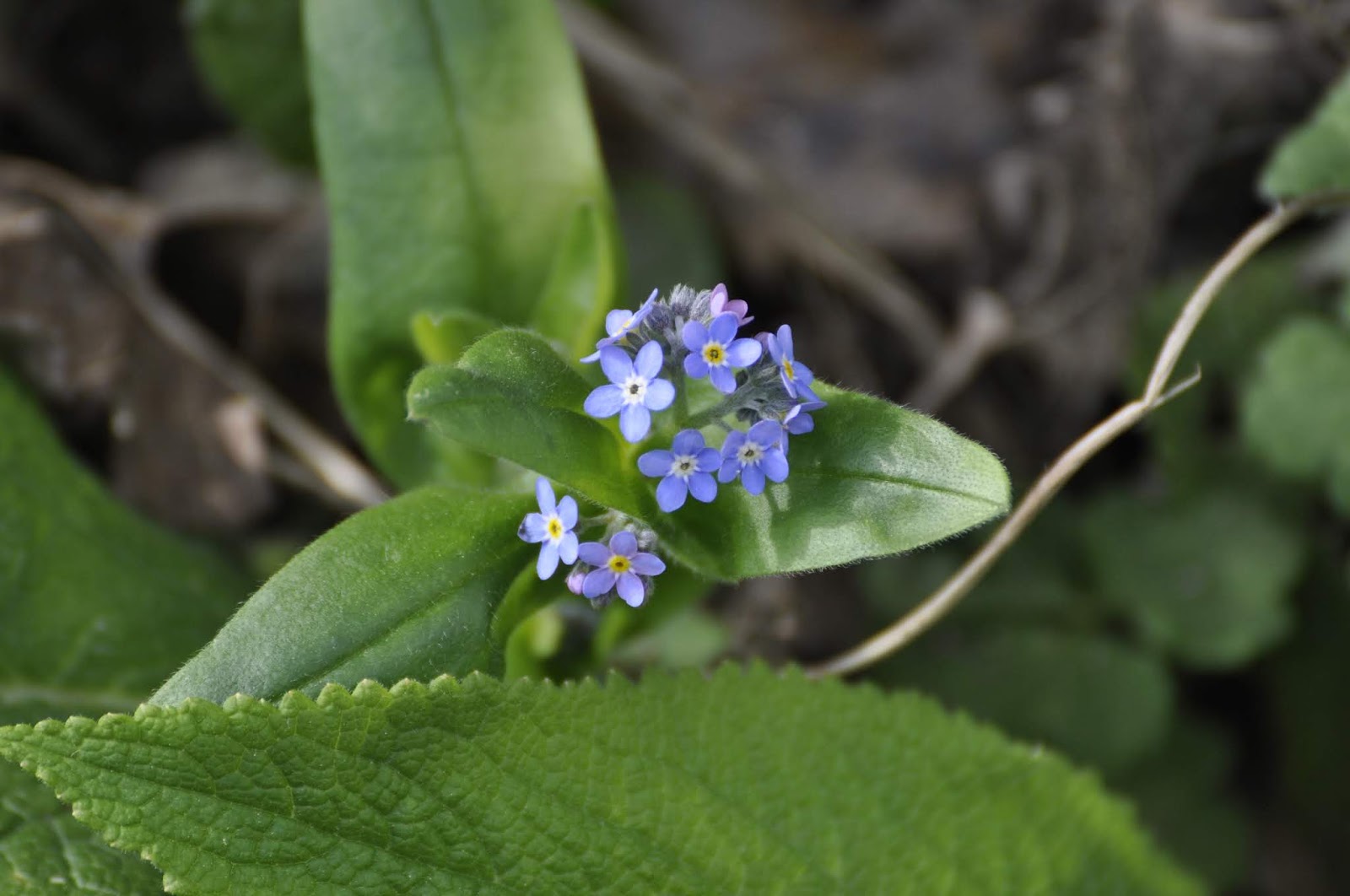
Field Forgetmenot

Field Pansy (sadly rather scarce now due to farming changes)

Common Ramping Fumitory

Field Madder

Red Dead Nettle

Honesty


Herb Robert

Ramsons

Curled Dock


Corn Marigold - a scarce arable plant


Monday, 16 March 2020

An ID article on American Black Tern


Last October myself and Pete headed up to Longham Lakes in Dorset to twitch the long-staying American Black Tern. The close views inspired me to do some research on this nearctic sub-species and learn about the finer I.D features of Surinamensis and the potential pitfalls when ruling out nominate European Black Tern. This article will hopefully show how to age a Black Tern in the autumn months and then it will move onto separating juvenile American Black Tern from European Black Tern. Although an adult summer plumage bird has yet to turn up in Britain I have included a brief summary of their identification. I'm sure more of these vagrant Tern's will be found in the UK as observer awareness increases and I also wonder why it isn't yet a full species seeing that it is readily identified at all ages.  

Status:
American Black Tern breeds in wetlands in the northern provinces of U.S.A and Canada and has a breeding population of up to 500,000 birds. They migrate through North America on a broad front with some birds heading overland to their wintering grounds in Central and South America whilst other populations head along the East Coast of North America making them obvious candidates for vagrancy to Western Europe. By 2019 eleven birds had been found in Britain and Ireland with the first record being at Weston-super-Mare on 3rd-11th October 1999. All occurences have been in the autumn from July-November with the peak month of occurrence being September (four records).  


Ageing:


Learning how to age Black Tern in Autumn will be invaluable if the chance of finding an American Black Tern ever comes along. Ageing should be straightforward with care:

·        Pay attention to the overall coloration of the bird in flight and when  perched. If it has crisp, brown feathers with neat fringing on the upperparts (especially the mantle when at rest and in flight the majority of the upperwing) these are 1st generation feathers and you can be sure it is a juvenile or 1st winter bird. An adult will have plain dark grey upperparts with no fringing.
·        Juvenile birds show tinges of brown in the cap whilst adults have a unifom dark blackish cap.
·        The distinctive dark breast sides are more obvious in juvenile birds and on average feinter (yet always present) on an adult.


Note the brown tinged mantle and notice the neat fringing to the upperparts feathers, it is a juvenile (photograph by Gary Thoburn).
The upperparts look warn and if you look closely there is no neat fringing to any feathers on the upperparts, it is an adult (photograph by Gary Thoburn).        


Identification:


All records of Surinamensis in Britain so far have been juvenile or 1st summer birds, these have several features which can help separate them from their more common European cousins at the same age:


  • Dark washed flanks 
  • An all dark tail with little contrast to the rump and mantle
  • Dark upperparts 
  • Broad dark breast sides which extend onto dark grey flanks


Note the brown tinged forehead and obvious brown breast sides which age this bird as a juvenile. The sooty grey flanks (which are white in juvenile European Black Tern) are a key feature of American Black Tern. The dark breast side also extends further on this subspecies, spreading onto the grey flanks.

The grey upperparts, black crown, pale rump and absence of prominent breast patch age this bird as an adult moulting out of summer plumage. Adults can show a varying amount of dark on the flanks in the autumn so are a potential pitfall (photograph by Gary Thoburn).


Juvenile European Black Tern has paler, more contrasty upperparts with a more prominent dark leading edge to the wing. The rump and tail are still rather dark but contrast more with the mantle. This photo shows the paler outer web of the outer tail feather, a characteristic of European Black Tern (photograph by Steve Rogers).


Juvenile American Black Tern has dark upperparts showing little contrast. The rump and entire tail are dark and don’t contrast much with the mantle.


For completeness juvenile White-winged Black Tern has a paler rump and upper-wing with a contrasting dark mantle. It also lacks the dark breast patch of the Black Tern (photograph by Gary Thoburn).


In summer plumage adult Black Tern, American Black Tern and White-winged Black Tern have key differences which allow identification highlighted by the photographs below:


Adult summer plumage American Black Tern hasn’t yet occurred in Britain but it is distinctive in its own right. It has the jet black body of a White-winged Black Tern and the darker upper-wing and underwing coverts of Black Tern.

Adult summer plumage White-winged Black Tern also has a jet black body but has a much paler upper-wing and underwing.

Adult summer plumage European Black Tern has a paler toned black body. It's upperparts and underparts are identical to American Black Tern being far more subdued than White-winged Black Tern.


I hope this article will help inspire you to look closely at any Marsh Tern you see in the future as a rare vagrant could occur just about anywhere even at your local patch. For instance I hope one turns up in Cornwall soon (surely it is overdue in my home county?). These stunning birds are always a treat to watch and yet can be equally frustrating to observe well so a bit of patience, good note taking and getting good photographs will always help with their identification.

Monday, 4 November 2019

Mounts Bay Egret is it or isn't it?

Mounts Bay unidentified Egret species

I had heard some murmurings of an interesting Egret being seen briefly around Mounts Bay but not pinned down or its identification nailed! Rumour had it that it could be a Snowy Egret, the Nearctic version of our Little Egret if you will! A few days passed with no news and I have to admit that I hadn’t given it a second thought. I then received a message from Paul Ash and some photos of the bird in question that had been located again in Penzance Harbour prior to high tide moving it on again. The photos had me hooked! I ran them past Bob and a couple of other birders that I hold in high esteem and they all had the same feeling. This bird was eye catching and deserved some attention! So, what was so interesting?


The original photos sent by Paul Ash showing some striking features such as the bright yellow on the lore's and apparent yellow colouration to the legs. (Photos courtesy of Paul Ash)
As you can see from the photos that Paul originally sent there are some striking features. Most notable was the intense yellow in the lore’s and the yellow on the back of the legs. Both good field characteristics of Snowy Egret on paper. Things were looking good in my mind but having only ever seen the species in Spring in America I threw caution to the wind and sought more experienced opinion. My first port of call was Kester Wilson who well and truly burst my rarity bubble! He was busy at work but gave his viewpoint that it was a Little Egret, “bugger” not the answer I had hoped for! A short while later another message came through from Killian Mullarney via Josh Jones. He also suggested that it was indeed a Little Egret! A real shame as I know that I wasn’t the only one that wanted it to be a Snowy. 

Why was it a Little Egret and not a Snowy?


A species had been determined but I wasn’t 100% sure I fully understood all the field characteristics that made this a Little Egret. So, it was time to do the hard work and get the field guides out and Google fired up! Here is what I found out:

The obvious place to start with the Egrets is the head, bill and lore’s. In theory these should be pretty easy to see on both species as neither are particularly timid or skulky. 

In the Little Egret, you will see a pale-yellow iris in combination with either a grey or a light green/yellow lore. In the Snowy both a bright yellow lore and eye is evident in non-breeding birds. 

The crucial feature is the shape and colour of the saddle that extends over the base of the bill. This affects the shape made by the feathers approaching the culmen: being rounded/crescent-shaped in a Snowy, rather than pointy in a Little.

Eye colour is also important as the iris of the Snowy and Little Egret are different! The Little Egret will have a paler eye than a Snowy Egret. Not all birds have the exact same eye colour, especially depending on the lighting conditions! It is a common occurrence to encounter a brighter looking eye than expected. But used in conjunction with other identification features can aid a conclusion.

The head and bill structure also differ, and a Snowy Egret will show a slightly more petite appearance to the head and a stout, less elongated bill. The Little Egret forehead slopes more gradually accentuating its long-billed and long-headed appearance. Not so obvious on lone birds but being somewhat gregarious the opportunity for comparison will be possible for the patient observer.

Here we have a Little Egret showing the pale eye and restricted loral patch. Also, the large head and long tapered bill can be seen with some detail. 
This photo shows a "classic" Snowy Egret and some differences are obvious. Firstly the large yellow saddle extends over the bill and the eye is extremely bright! Also, note the smaller head and  slightly shorter, blunter bill.
The Mounts Bay Egret initially shows some striking features but on further scrutiny they all fit Little Egret. The yellow saddle is not present over the bill. The Iris colour is also pale yellow as opposed to bright yellow as would be shown in a Snowy Egret. It also shows a head and bill pattern indicative of Little Egret. (Photo courtesy of Julie Eccleston)
The legs are another important feature to observe albeit can present some problems. A little prior knowledge of the pitfalls is useful. 

Adult Little Egrets have black legs, with yellow feet. Snowy Egrets show not only yellow on the feet but yellow or a light greenish/grey colour trailing the back of the legs. If you’re able to establish that your bird is an adult, you can easily use this as a pretty reliable feature. However, you’d want to consider your verdict of both the lore and the iris, but if your bird has a bright yellow lore, iris and has light colouration on the back of the legs then it may be time to get on the phone to Birdguides!

The pitfall comes when observing younger birds! As a general rule the younger a Little Egret is, the lighter the legs are. Their legs become darker as they age. This is where it can become a little tricky, and there is still the possibility of a young Little Egret having light colouration on the legs, in conjunction with the typical black colouration. It is worth noting feet colour as Snowy Egret will always show golden yellow whereas Little's are drabber yellow-green.

A Little Egret showing the obvious black legs and yellow feet that are generally slightly longer and thicker than that of Snowy Egret. A prominent feature that is obvious when birds fly or are walking on land or shallow water.
A Snowy Egret showing not only yellow on the feet but also yellow along the back of the legs.
The Mounts Bay Egret did show some pale yellow on the back of the legs. However, this can be indicative of younger Little Egrets and not a feature that should be relied upon for positive identification of Snowy Egret. (Photo courtesy of Julie Eccleston)
The last important factor is size difference. In most cases, size is an extremely difficult to judge. You essentially need the two species standing next to each other to be able to identify whether the bird is smaller than the other. Little Egret is slightly larger in size, but not by much! However, it has a slightly more robust appearance and Snowy Egret would look some what petite in a Little's company.

Here we see the Mounts Bay Egret (Right) with a Little Egret. No obvious structural differences are apparent adding validity to the Little Egret identification. (Photo courtesy of Paul Ash)
Sadly it wasn't to be this time! But I for one am really pleased that this individual presented itself as for me personally, it was a really good learning bird. I certainly feel that if I was ever fortunate enough to encounter an individual in Cornwall I would now have a good chance of identifying it. I hope you can too? If you do remember to let me know first :-) !